
How ASTM D945-22 testing helps engineers evaluate real-world rubber stiffness, damping, and impact behavior.
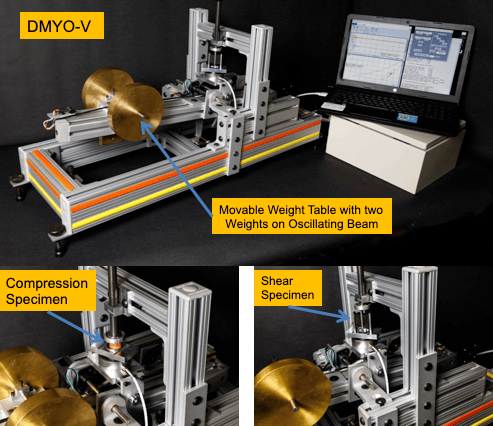
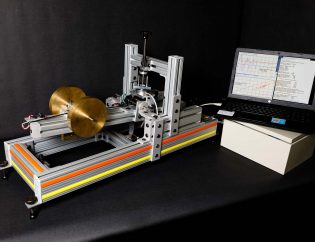
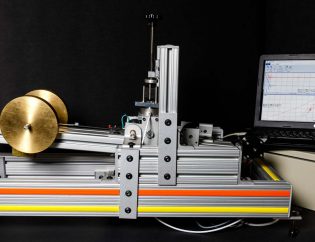
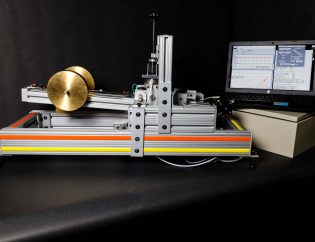
In the context of dynamic testing, particularly when using a free-oscillation device like the Yerzley Oscillograph (DMYO V), the secant modulus represents a quasi-static measurement derived from the first cycle of a dynamic test.
It measures the material’s stiffness at a specific point of maximum deformation rather than the average stiffness over a full vibration cycle.
Definition and Calculation
The secant modulus is defined as the ratio of maximum stress to maximum strain at a specific point on the loading curve during initial displacement.
Unlike storage modulus, which is calculated from the energy returned during steady-state vibration, secant modulus is essentially a snapshot of the material response during the first loading cycle.
In a natural frequency test:
- A weight is released, causing the elastomer to compress or shear.
- The maximum deformation, or peak of the first oscillation, is recorded.
- The secant modulus is calculated from the ratio of maximum stress to maximum strain at peak deformation.
The Role of Natural Frequency
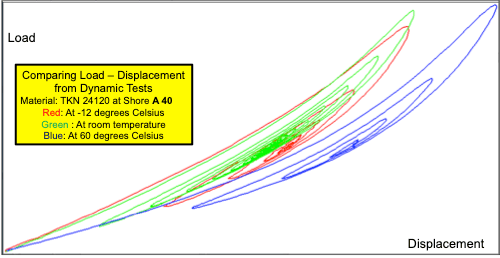
Elastomers are viscoelastic, meaning their stiffness depends on how quickly they are loaded. Testing at natural frequency helps engineers evaluate how rubber behaves under real dynamic conditions.
- System Resonance: The frequency is determined by the mass of the testing apparatus and the inherent stiffness of the rubber sample.
- Inertial Effects: Because the secant modulus is often taken from the first cycle, it captures the material’s resistance to the initial high-energy input before the system settles into rhythmic decay.
Secant Modulus vs. Dynamic Modulus
In dynamic mechanical analysis, it is important to distinguish secant modulus from dynamic storage modulus.
- Test State
- Secant Modulus: Initial loading or peak of cycle
- Dynamic Storage Modulus: Steady-state oscillation
- Linearity
- Secant Modulus: Usually accounts for non-linear behavior
- Dynamic Storage Modulus: Often assumes linear viscoelastic behavior
- Application
- Secant Modulus: Predicting bottoming out or initial impact
- Dynamic Storage Modulus: Predicting vibration isolation and damping
- Calculation
- Secant Modulus: Slope from origin to peak
- Dynamic Storage Modulus: Stress-to-strain relationship during oscillation
Why Use Secant Modulus for Rubber?
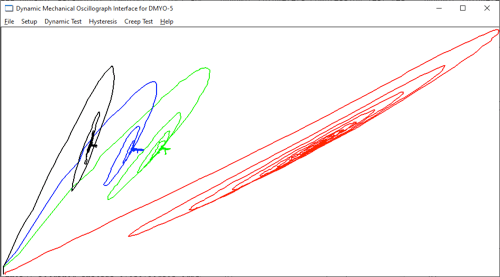
For engineers working with ASTM D945-22 standards, secant modulus is commonly used because rubber exhibits highly non-linear behavior.
As strain increases, the stiffness of the elastomer changes. Secant modulus provides a real-world stiffness value for a specific deflection, such as 20% compression.
In dynamic systems like engine mounts or bumpers, stiffness at peak impact is often more important than the average storage modulus measured during small vibrations.
For a broader discussion on evaluating rubber behavior under real-world loading conditions, read our article on investigating elastomeric materials under dynamic conditions.
ASTM D945-22 and Dynamic Rubber Testing
ASTM D945-22 is a standardized test method used to evaluate the dynamic properties of rubber and elastomeric materials under compression or shear loading. The method is commonly associated with Yerzley Oscillograph testing, including modern systems such as the DMYO V.
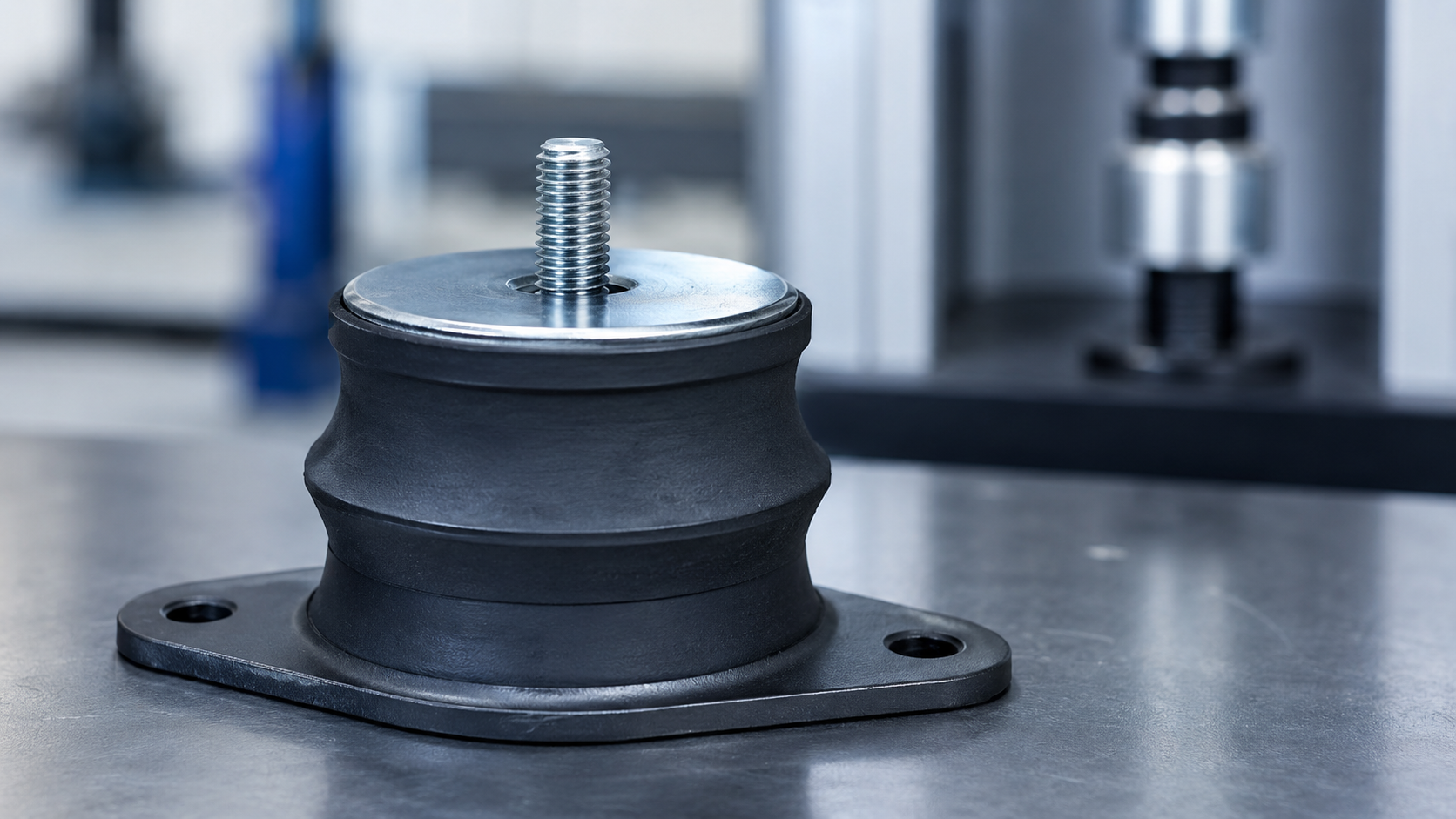
Unlike purely static testing methods, ASTM D945-22 focuses on how rubber behaves under dynamic conditions, including vibration, oscillation, damping, and repeated deformation. This makes it particularly useful for evaluating materials used in engine mounts, bushings, vibration isolators, seismic components, and other applications where elastomers experience real-world mechanical movement.
Using free oscillation, the test measures how the elastomer responds after an initial displacement. Engineers can evaluate characteristics such as resilience, hysteresis, damping behavior, and dynamic stiffness under natural frequency conditions.
Because rubber is viscoelastic and highly non-linear, ASTM D945-22 testing provides valuable insight into how materials behave during actual service conditions rather than under purely static laboratory loading.
Conclusion
Secant modulus provides engineers with a practical way to evaluate rubber stiffness during real dynamic loading conditions. In ASTM D945-22 testing, it helps characterize how elastomers respond to impact, vibration, and natural frequency behavior during the earliest stages of deformation.
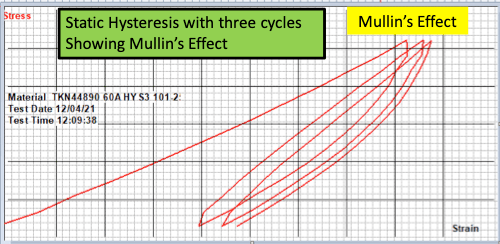
If the elastomer exhibits significant Mullins Effect, or stress softening, the secant modulus measured during the first cycle may be considerably higher than values measured during later cycles.
Questions about dynamic elastomer testing or Yerzley analysis methods? Reach out to Tavdi to learn more about DMYO-V testing applications and capabilities.
GET IN TOUCH